

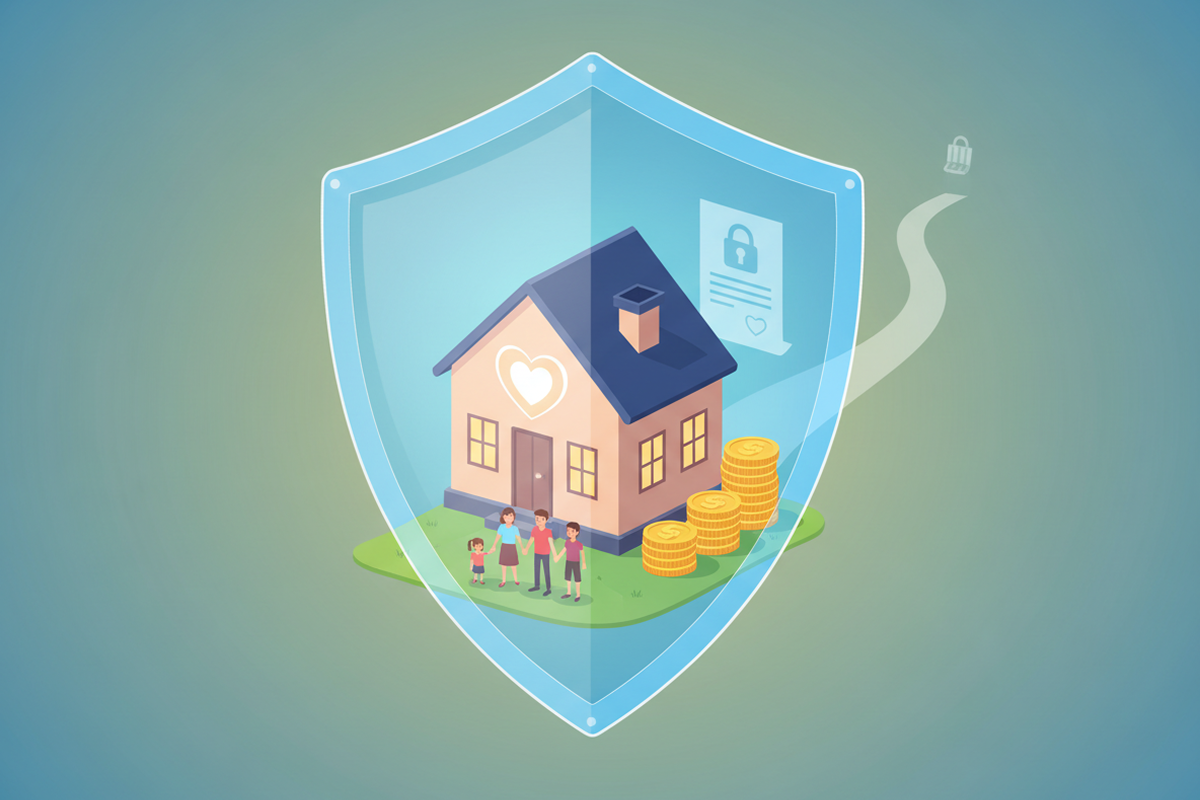
Buying a home is one of the most exciting milestones in life. It’s a fresh start. A foundation. A place where memories will be made.
But it’s also one of the biggest financial commitments you’ll ever take on.
And here’s the part no one really likes to talk about:
What happens to that mortgage if something happens to you?
Your Mortgage Doesn’t Go Away
When you sign your mortgage papers, you’re committing to 15, 20, or 30 years of payments. That obligation doesn’t disappear if you pass away unexpectedly.
If you’re married or have kids, your spouse or partner would suddenly be responsible for:
- Monthly mortgage payments
- Utilities and household bills
- Groceries and daily expenses
- Childcare and school costs
- Possibly funeral expenses
That’s a lot for one person to carry alone, especially while dealing with the emotional weight of the loss.
The Caregiver Dilemma
In many families, one person earns the majority of the income. In others, both incomes are essential to keeping everything afloat.
Now imagine this scenario:
- Your spouse is grieving.
- They’re trying to be strong for the kids.
- And the mortgage payment is still due on the 1st.
If the caregiver of the house had to make mortgage payments and take care of your dependents, how would they realistically do both?
Would they need to:
- Sell the home?
- Downsize immediately?
- Move in with family?
- Take on extra work during an already devastating time?
Life insurance prevents those decisions from being made under pressure.
Life Insurance = Financial Stability During Emotional Chaos
The purpose of life insurance after getting a mortgage is simple:
It protects your home.
A properly structured policy can:
- Pay off the remaining mortgage balance
- Replace lost income for several years
- Cover childcare and education costs
- Give your family time to grieve without financial panic
Instead of scrambling, your loved ones have options.
They can stay in the home. They can maintain their lifestyle.
They can focus on healing, not survival.
It’s About Them.
Most people don’t buy life insurance because they don’t want to think about worst-case scenarios. It feels uncomfortable.
But buying life insurance after getting a mortgage isn’t about fear.
It’s about being prepared.
You just committed to protecting your family with a roof over their heads. Life insurance protects that promise.
It ensures that if you’re not there to make the payments, the house — and the security it represents — doesn’t disappear too.
When Should You Buy It?
The best time to buy life insurance is:
- Right after closing on your home
- When rates are lower because you’re younger and healthier
- Before a medical issue makes coverage more expensive
Waiting only increases cost and risk, so contact a financial consultant today.